
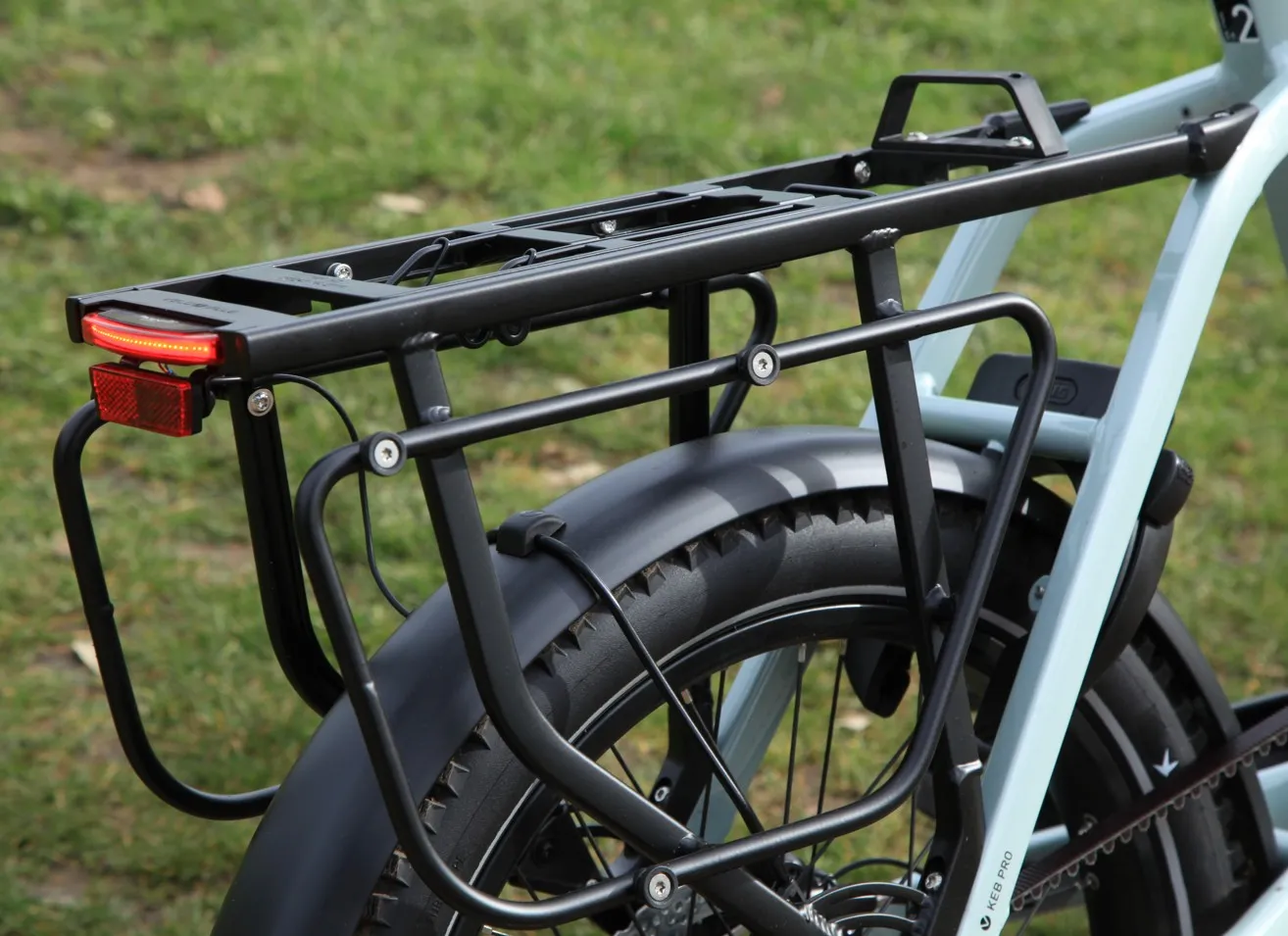
MIK vs MIK HD: Which Rack is Right for Your E-Bike?
If you’re using an e-bike for commuting, grocery shopping, or school runs, you’ve likely encountered the term MIK. Short for “Mounting Is Key,” MIK features a click-in interface that swaps out traditional straps and hooks for a streamlined slide-and-lock mechanism. Simply place your accessory on the rack, slide it forward into the MIK “window,” and hear the satisfying click as it locks securely in place. When it’s time to remove it, just use a small plastic key. This setup not only speeds up the process but also provides a more stable hold on uneven urban surfaces.
But how do you know which rack is best suited for your riding needs? We delve deeper into the differences between MIK and MIK HD racks to help you make an informed choice.
The MIK Bike Rack
Many urban and hybrid e-bikes come equipped with a MIK bike rack or can be retrofitted with a MIK carrier plate. If you’re still exploring your options, consider checking out reviews on the best electric commuter bikes and guides tailored for e-bike newcomers.
MIK vs. MIK HD: Understanding the Differences
At first glance, MIK and its counterpart, MIK HD, appear similar. Both systems are designed to securely carry everyday items, such as panniers and baskets. However, the distinction between the two goes beyond mere marketing—it lies in engineering and approval.
MIK HD is specifically designed for heavier loads and is crucial for users who need to accommodate rear child seats. A standard MIK rack is great for carrying luggage but is not rated for child seats. Conversely, a MIK HD rack features a sturdier construction, allowing for increased capacity while remaining compatible with regular MIK accessories.
This distinction is especially important for e-bikes, which are generally heavier and operate at higher speeds, necessitating greater stiffness from the rear rack. This article clarifies how both systems operate, what they accommodate, and how to select the appropriate option for your e-bike.
What is MIK and How Does it Function?
MIK serves as a modular luggage interface for rear racks. Some racks integrate the MIK window directly, while others utilize a MIK carrier plate bolted on top. Your bag, basket, or crate comes equipped with a MIK adapter plate, allowing you to effortlessly slide the accessory onto the rack rails, engage it, and enjoy a secure click.
Removal is tool-free—simply insert the MIK key and slide the accessory off. For daily e-bike use—such as transporting laptops, locks, chargers, or groceries—the system proves quick, organized, and secure. With accessories resting low and closely attached to the platform, you’ll find enhanced stability even at higher speeds.
What is MIK HD, and When Should You Choose It?
MIK HD brings the same convenience of the MIK system but with reinforced construction and child seat approval. Rack labeling will indicate “MIK HD” on either the platform or side rails. The enhanced stiffness increases load capacity and minimizes flex when carrying heavier items. When fitted with the appropriate child seat, this system is rigorously tested for safety, making it an excellent option for families.
If you are still in the planning phase and might consider fitting a child seat later, opting for a MIK HD bike rack provides peace of mind. It ensures compatibility with standard MIK luggage while being engineered to endure heavier loads. This adaptability becomes especially valuable on long rides.
Compatibility and Safety: MIK vs. MIK HD on E-Bikes
As a rule of thumb: use MIK for luggage; choose MIK HD for child seats. A standard rack equipped with a bolt-on MIK carrier plate remains unsuitable for HD-rated accessories, including child seats. Always confirm the labeling on your rack; if it lacks “MIK HD,” treat it as luggage-only.
When considering an e-bike rack, pay attention to three essential factors: the rack’s load limit, compatibility with lights and wiring, and ride stability at higher speeds. A stiffer HD-rated rack lends itself to more predictable handling, particularly with heavier loads.
Key Considerations
- Identifying an HD Rack: Look for the “MIK HD” designation on the platform or side rails.
- Using MIK Accessories on MIK HD: They are indeed backward-compatible.
- Upgrading an Existing Rack: Adding a MIK carrier plate allows for luggage compatibility but does not change the rack’s structural rating, which is vital for child seats.
- Recommended Loads: Follow the manufacturer’s guidelines, as MIK ratings vary by model, while MIK HD is engineered for heavier capacities.
- Is MIK Worth It if You Don’t Carry a Child? For most commuters, yes—MIK provides a quick and secure system well-suited for e-bikes.
In conclusion, choose MIK for swift and reliable luggage transport on your e-bike. Opt for MIK HD if you plan to fit a rear child seat or frequently carry heavier loads. While the convenience remains constant, the crucial differences hinge on structural approval and safety standards. Ensure your rack is clearly marked with “MIK HD,” verify its load rating, and you’ll have a configuration that seamlessly accommodates both daily commutes and weekend family adventures.
Sources
- Various bicycle and e-bike manufacturers and accessory brands.
- Recent publications and articles regarding e-bike accessories from 2026.
- Expert reviews and recommendations from the cycling community.
